Glass & Mirror Shop in Grass Valley, California

Home » Skylights Installation

Skylight Installation in Grass Valley, California

Does your home feel dark inside, even on sunny days? A skylight can fix that. We are Pro Glass and Mirror. We install, replace, and repair skylights for homes and businesses across Nevada County. We are a VELUX-certified installer. This means we are trained to the exact standards that the VELUX manufacturer requires. Also, we handle your Title 24 energy code compliance and pull all your permits. We serve Grass Valley, Nevada City, Penn Valley, Cedar Ridge, and nearby communities. First, we visit your roof in person. Next, we assess the structure, pick the right location, and walk you through your options. Then, we install everything cleanly and back the whole job with a leak-proof written warranty.

Why Northern California Homeowners Trust Pro Glass & Mirror

Skylight Types & Products We Install

We offer a wide selection of skylight options to fit your roof type, room layout, energy goals, and design preferences. Whether you’re upgrading an existing unit or planning a brand-new installation, we’ll help you choose the right style for your home or commercial space.

Fixed Skylights

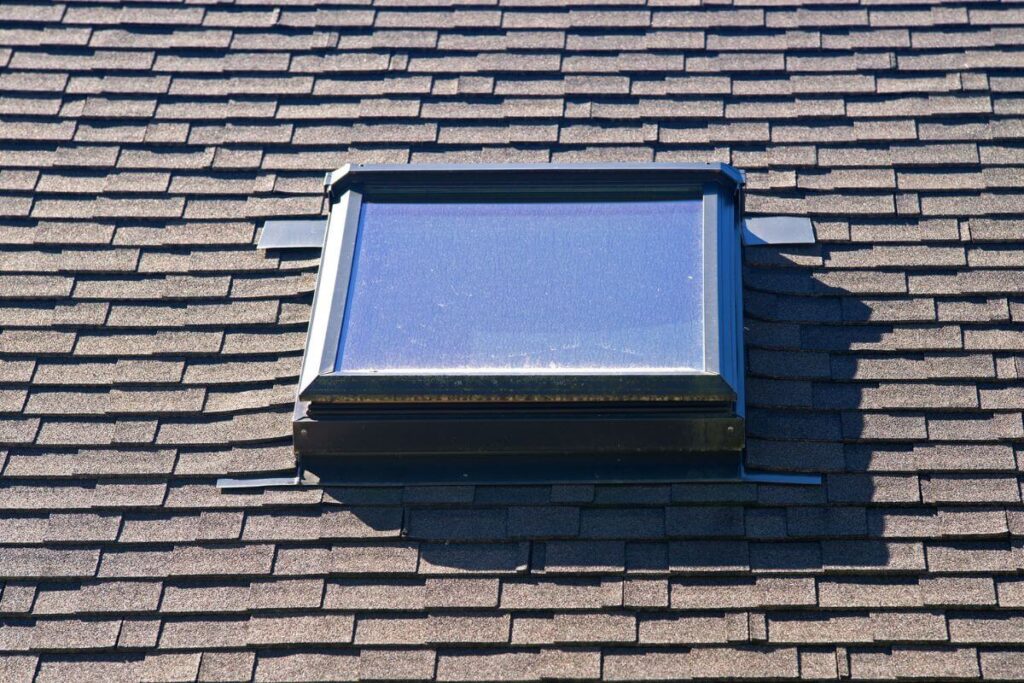
A fixed skylight is the most common type homeowners choose. It is sealed shut and does not open. This means it lets daylight into your home without moving parts that can wear out. Also, fixed skylights are the most weather-resistant option available. They are a great fit for Grass Valley and Nevada City homes because they hold up well through Sierra Nevada winters. First, we assess your roof structure and pick the right sun position for your room. Next, our team uses a roofing-grade step flashing bending brake to shape custom aluminum step flashing pieces around the skylight curb. This tool bends the flashing to the exact angle of your roof slope so the fit is tight and waterproof. Then, we install a VELUX laminated low-E tempered fixed skylight glazing unit into the curb opening. This glass unit meets the energy rules in California Title 24 Part 6 Section 141.0. This section requires skylights to have a Solar Heat Gain Coefficient (SHGC) of no more than 0.25 in most California climate zones. This means your home stays cooler in summer without losing natural light.

Venting Skylights

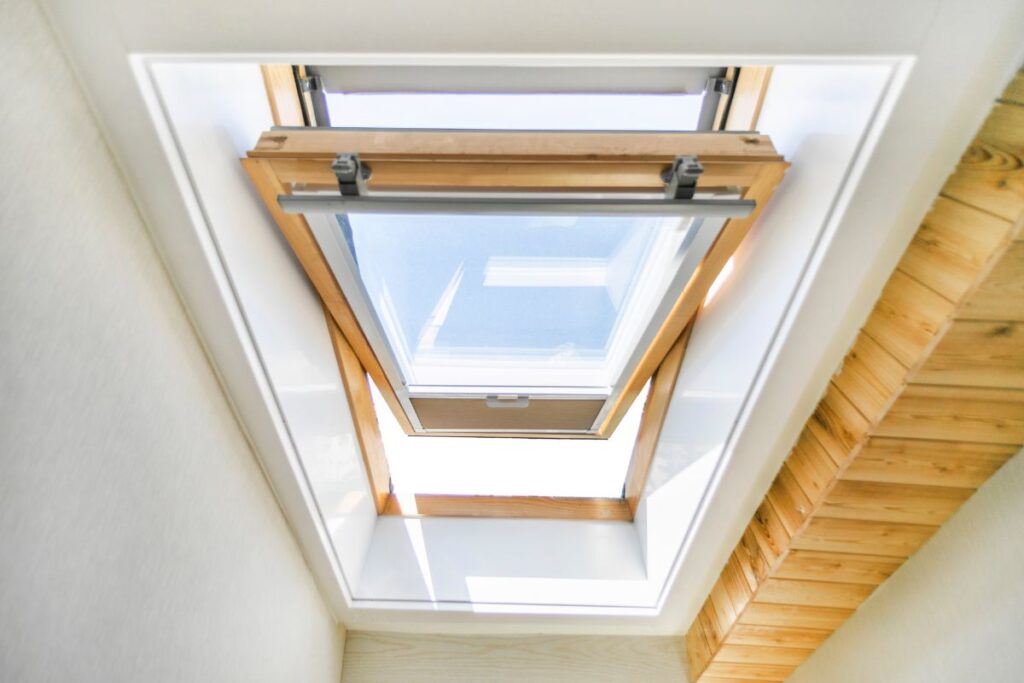
A venting skylight opens to let hot air and moisture escape your home. This is called passive ventilation. This means that hot air near your ceiling rises and exits through the open skylight while fresh air enters through lower windows. Also, this reduces the load on your air conditioner in summer. Venting skylights work especially well in kitchens and bathrooms. Next, you can choose between a manual crank model or a solar-powered motor model. The solar-powered version opens and closes automatically on a schedule or with a remote. First, we install the skylight unit and secure the frame to the curb. Next, our technicians use a solar-powered skylight motor voltage tester to check that the motorized vent opener is receiving the right power and closing fully. This tool catches wiring and motor issues before we leave your roof. Then, we set the VELUX solar-powered venting skylight panel into the frame and seal all edges. This unit meets the ventilation rules in California Building Code Section 1203.4. This section sets the minimum natural ventilation opening size required for habitable rooms. This means your kitchen or bathroom now has a code-compliant way to breathe fresh air every day.

Tubular Skylights

A tubular skylight sends natural light into rooms that a regular skylight cannot reach. It works like a light pipe. First, a small dome on your roof captures sunlight. Next, the light travels down through a highly reflective metal tube through your attic. Then, a round ceiling diffuser spreads that light into the room below. This means you can add natural light to any hallway, closet, or bathroom even if it sits directly under another floor or far from an exterior wall. Many older homes in Penn Valley and Alta Sierra have interior bathrooms and hallways with no windows and no direct roof access above them. A tubular skylight is the only practical solution for these spaces. Our crew uses a reflective tube section alignment mandrel to join each tube segment in the correct orientation as it bends through your attic. This tool keeps the reflective interior surface perfectly aligned so no light is lost along the route. Then, we install a Solatube 10-inch highly reflective metal sun tunnel tube from your roof dome to your ceiling diffuser. This system satisfies the daylighting credit rules in California Title 24 Part 6 Section 140.3(a). This section allows tubular daylighting devices to count as natural light credit in energy compliance calculations for California remodels. This means your whole-home remodel may now meet its required lighting code credit without adding any extra windows.

Architectural & Custom Skylights

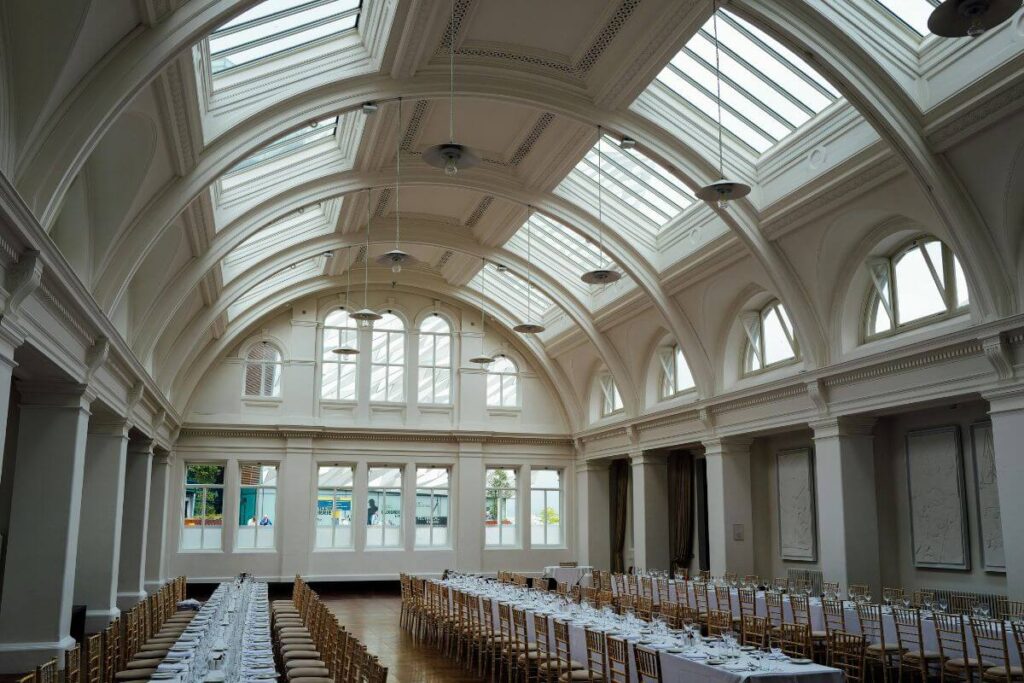
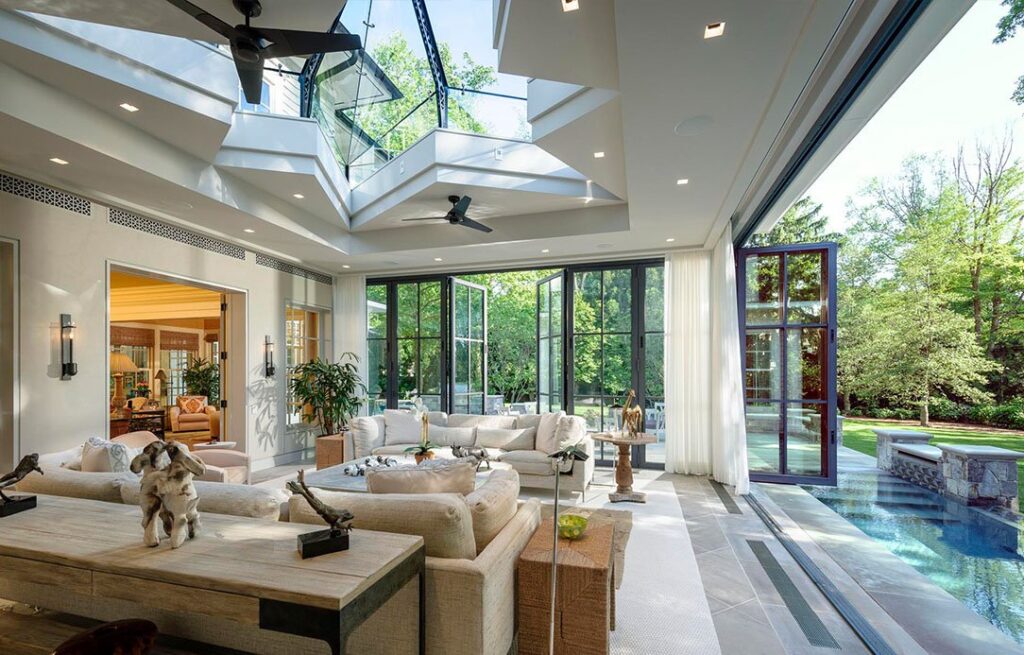
Some homes and commercial buildings need a skylight that goes beyond a standard rectangular unit. We design and install three types of custom skylights. A pyramid skylight has four glass panels that meet at a peak. It is common in cupolas, atriums, and rotundas. A barrel vault skylight uses a curved glass run above a hallway or lobby. A dome skylight uses an acrylic or polycarbonate dome shell and is common on flat commercial roofs. All of these require custom engineering. First, we design the opening and framing layout for your roof structure. Next, our fabrication team uses a structural roof opening header template jig to cut the roof framing opening at the exact size and angle needed for the custom skylight unit. This tool eliminates measurement error when removing rafters and building a structural header. Then, we install the custom pyramid tempered glass skylight panel system into the reinforced opening. This glass meets the structural rules of California Building Code Section 2405.3. This section covers sloped and overhead glazing installations. It sets the minimum glass strength, edge support, and safety glazing standards for custom roof glass. This means your architectural skylight is built to meet both structural and safety code from day one.

Skylight Replacement & Glass-Only Upgrades
If your existing skylight is leaking, foggy, or hazy inside the glass, you may not need a full replacement. In many cases, only the glass needs to be changed. If the curb and frame are still in good condition, we fabricate a new replacement glass panel in our own shop. We cut panels for VELUX, Solatube, ODL, and most contractor-grade units. Also, this option costs much less than a full unit replacement because it requires no roofline work. First, we inspect your existing frame and curb for structural damage. Next, our team uses an IGU thermal seal vacuum test gauge to check whether the old insulated glass unit has a broken seal. This tool measures the seal pressure difference between the two glass panes to confirm whether moisture has entered. Then, we install a double-pane low-E replacement skylight IGU panel sized to your existing frame opening. This replacement glass meets the fenestration upgrade rules in California Title 24 Part 6 Section 110.6(a). This section requires replacement glazing in an existing skylight frame to meet current SHGC and U-Factor standards. This means that your glass-only upgrade also brings your skylight into current energy code compliance.

Skylight Maintenance & Leak Repair

A skylight is a hole in your roof. Like any roof component, it needs periodic care to stay watertight. Most skylight leaks are caused by flashing failure. This is not a glass problem. It is a roofing problem. Improper step flashing, dried-out caulk, or a shifted counter-flashing joint allows water to enter around the curb. Also, failed IGU seals can cause moisture to appear between the glass panes, which looks like a leak but is actually a glass failure. We diagnose both problems. First, we inspect the skylight from the roof surface. Next, our team uses an infrared roof moisture scanning camera to detect hidden moisture trapped under the roofing material around the skylight curb. This tool finds water intrusion that is invisible from the surface before it causes interior ceiling damage. Then, we remove and reinstall the lead-free rubberized asphalt step flashing membrane around the full perimeter of the curb in the correct layered sequence. This repair follows the roofing rules in California Roofing Code Section 1507.2. This section sets the installation standards for step flashing at all roof penetrations. This means your skylight repair is done to the same code standard as a brand-new installation.

How Our Skylight Installation Works

We follow four clear steps on every project:

Free Roof and Space Assessment

First, we visit your home and walk your roof. We check the structure, slope, framing, and the best sun angle for your skylight location. We identify any structural reinforcement your roof may need before we quote.

Permit Application & Title 24 Review

Next, we prepare all documents, including structural drawings and Title 24 energy compliance calculations. We submit everything to the Nevada County Building Department or the City of Grass Valley. We do not cut any glass or open any roof until your permit is approved.

Curb Construction, Flashing, and Installation

Then, we cut the roof opening, build the curb to the correct height, install step flashing and counter-flashing in the proper sequence, and set the skylight unit. We do not rush the flashing step. This is where most other contractors create leaks.

Interior Finish and Walkthrough

Last, we install the interior light well or shaft extension if needed, complete all drywall and trim prep work, and test any venting mechanisms. We walk you through the finished skylight and explain how to maintain it before we leave.

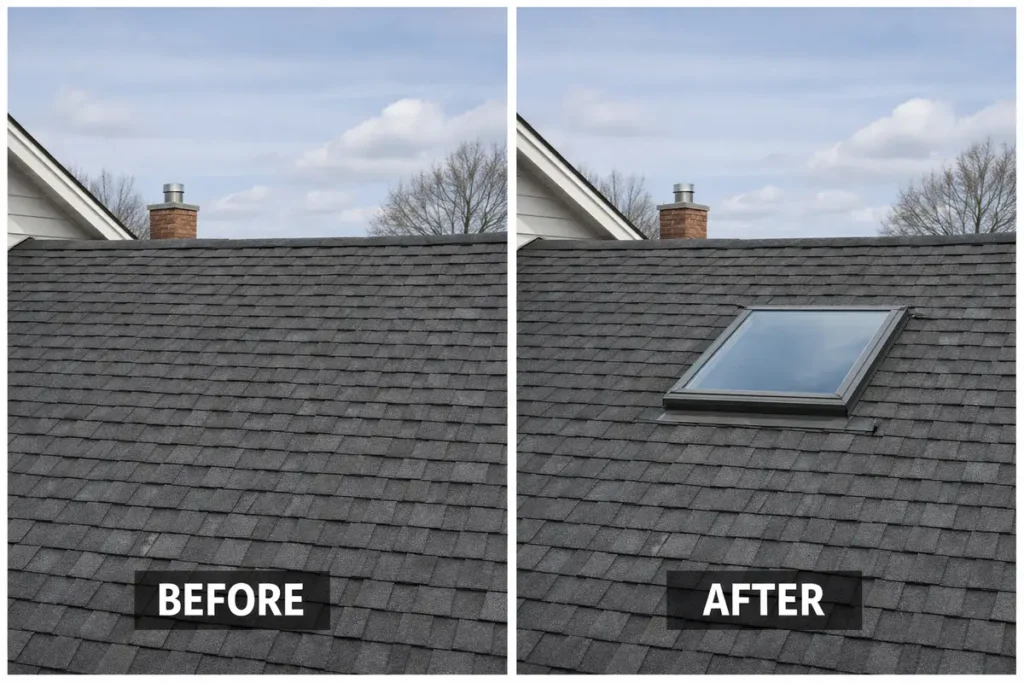
Skylights Installation Showcase – Initial Condition & Finished Work

These before and after skylights installation photos document a professional roofing upgrade captured from the same angle, lighting, and location for clear comparison. The before image shows a clean, uninterrupted shingle roof,

while the after image highlights a properly installed skylight that sits flush with the roof surface and blends seamlessly with existing materials. The result reflects a realistic, code-compliant skylights installation designed to improve natural light without altering the surrounding structure or roof integrity.

California Code Compliance: Title 24, Permits & Structural Requirements

Skylight installation in California involves three compliance layers that most contractors handle incorrectly:

Title 24 California Energy Code

Title 24 Part 6 governs the energy performance of skylights through three key metrics:

Building Permits City of Grass Valley & Nevada County

New skylight installations and skylight replacements that alter the roof structure require permits in most Nevada County jurisdictions. We manage the complete submission process drawings, structural notes, Title 24 compliance documentation, and inspection scheduling.

Structural Assessment

California's foothill and mountain homes frequently have truss roof systems where cutting a skylight opening requires an engineered header and lateral blocking. We assess every roof before quoting and identify any structural modifications required to keep your installation code-compliant and structurally sound.

Skylight Maintenance & Emergency Leak Repair

A skylight is a roof penetration. Like any roof component, it benefits from periodic inspection and maintenance to maximize lifespan and prevent small issues from becoming expensive repairs.

Component Replacement & Upgrades

Leak Diagnosis & Emergency Repairs

Our annual maintenance service covers

Bring Natural Light Into Your Grass Valley Home Today

Are you ready to brighten a dark room or improve your home’s ventilation? We suggest starting with a free roof and space assessment. Our team will visit your home, measure your roof, and show you the exact skylight options that will work for your layout and budget. The team at Pro Glass and Mirror has been installing skylights on Sierra Nevada foothill roofs for over 15 years. Call us today at 530-278-6935 and let us get started.

Frequently Asked Questions

Will my skylight leak?
A skylight that is installed with correct step flashing, counter-flashing, and the right sealant will not leak. Almost every skylight leak traces back to improper flashing, not the glass. We back every installation with a leak-proof written warranty. If it leaks, we fix it at no cost.
A fixed skylight is sealed shut. It brings in light only. A venting skylight opens to let hot air and moisture escape. Venting skylights cost more but are very useful in kitchens, bathrooms, and sleeping lofts where air circulation matters.
Choose a tubular skylight when the room you want to light sits far below your roof with no direct overhead access. Also, choose it for hallways, closets, and interior bathrooms under a second story. It is also less expensive than a full skylight installation.
Yes. New skylight installations and structural replacements require a building permit in Grass Valley and Nevada County. We handle every step of the permit process. You do not need to visit the building department yourself.
California Title 24 is the state’s mandatory energy code. It requires skylights to meet minimum SHGC and U-Factor values for your climate zone. We select the right glass specifications and include Title 24 compliance documents in every permit package we submit.
A standard fixed or venting skylight on a single-story home takes one full day to install. Permit processing in Nevada County typically takes two to four weeks. We do not start installation until your permit is approved.
Yes. If your curb and frame are still solid, we fabricate a new replacement glass panel in our local shop. We make panels for VELUX, Solatube, ODL, and most contractor-grade units. This costs much less than a full unit replacement.
If the glass is cracked or fogged inside the panes, you need a glass replacement. If the glass is clear but water is coming in around the edges, you likely need a flashing repair. We assess both problems during a free site visit and give you an honest recommendation.
We recommend tempered glass units over acrylic dome skylights for all homes in Grass Valley and the Nevada County area. Tempered glass handles Sierra Nevada snow loads better and holds up against wildfire embers in the Wildland-Urban Interface (WUI) zone.
 A standard fixed or venting residential skylight typically costs between $1,500 and $4,500 installed. Tubular skylights generally range from $500 to $1,500 installed. The final cost depends on your unit type, glass specification, roof complexity, and permit fees. Call us at 530-278-6935 for a free itemized site quote.
Scroll to Top