Home » Curtain Wall Installation
Professional Curtain Wall Installation in Grass Valley, California
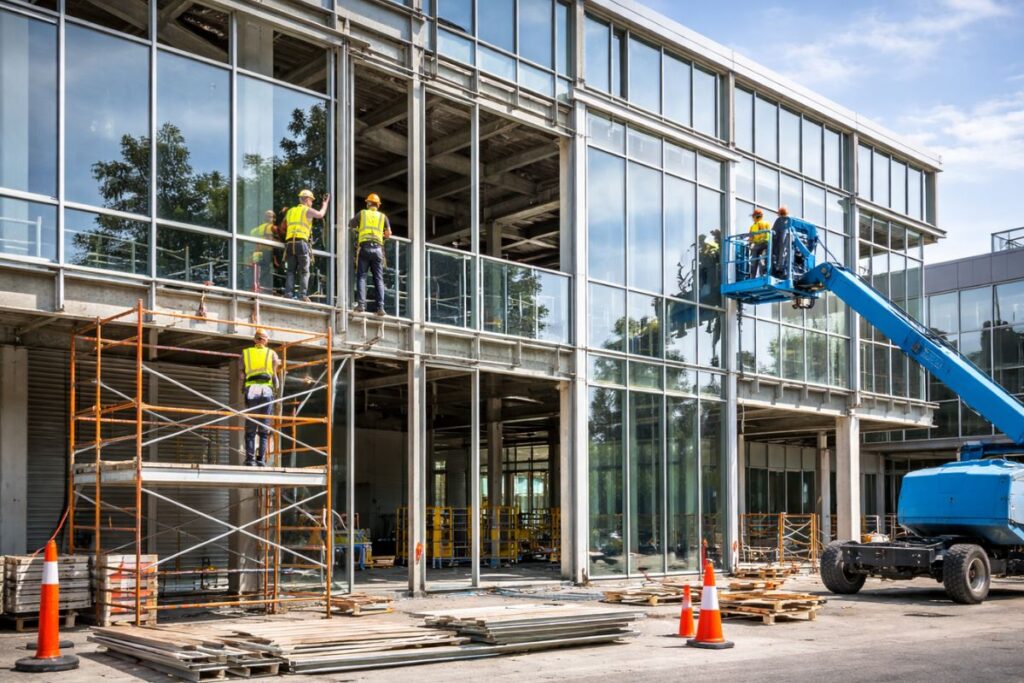
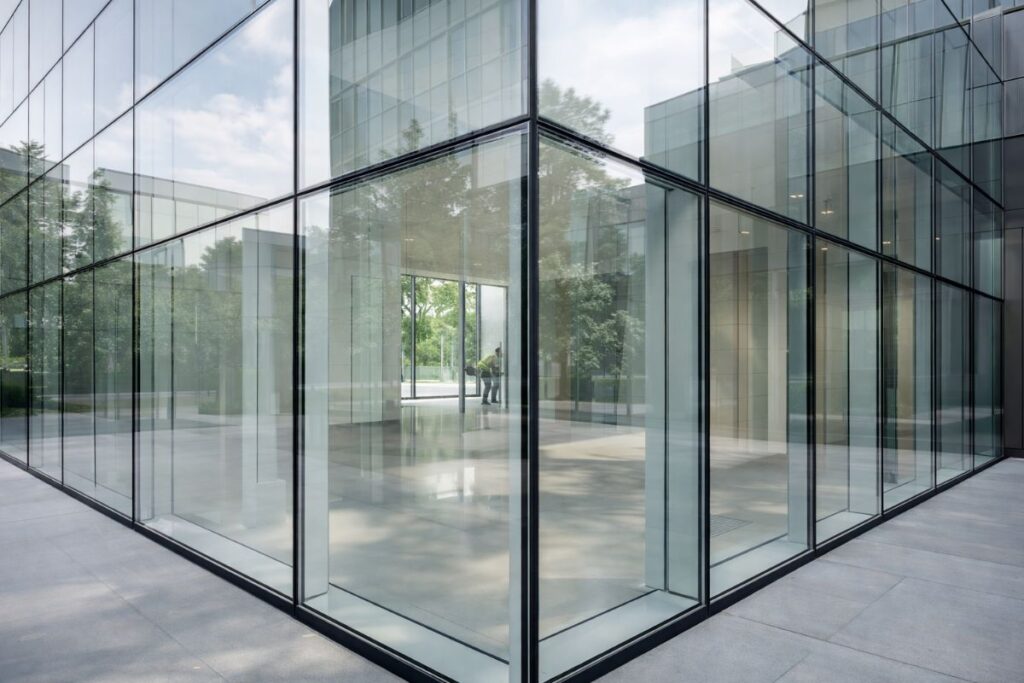
A curtain wall is the outer glass and frame skin of a commercial building. It covers the outside of the structure from floor to ceiling. It keeps out wind, rain, and heat while letting natural light inside. Also, it gives the building its finished look from the street. We are Pro Glass and Mirror. We install, replace, and maintain curtain wall glass systems for commercial buildings across Nevada County. We work directly with general contractors, architects, and structural engineers. This means that your project stays on schedule and meets every California Building Code and Title 24 energy requirement. We serve Grass Valley, Nevada City, Penn Valley, Colfax, and the surrounding Northern California region.
Why Contractors & Building Owners Choose Pro Glass & Mirror
General contractors, architects, and building owners in Nevada County choose us for commercial curtain wall work for several direct reasons:
-
Commercial-Only Installation Focus
We work exclusively on commercial and institutional glazing projects. This means our crew is trained and equipped for multi-story facades, not residential glass work. -
20+ Years of Complex Curtain Wall Experience
We have installed stick-built systems, unitized panels, and structural silicone glazing facades on commercial buildings across Northern California. We know what field problems look like and how to resolve them before they delay your schedule. -
GC, Architect & Engineer Coordination
We review shop drawings, flag constructability issues early, and attend project meetings as needed. This means fewer RFIs and fewer surprises during installation. -
Clean, Safe, On-Schedule Job Sites
We maintain organized job sites that allow other active trades to work alongside our installation without interference or safety conflicts.
What Types of Curtain Wall Systems We Install
Every building has different structural demands, design goals, and budget considerations. We install a range of curtain wall glass systems, selecting the right approach based on building height, schedule, performance requirements, and architectural intent.
Stick-Built Curtain Wall Systems
A stick-built curtain wall system is assembled piece by piece on your building site. This means that every mullion and transom section is measured, cut, and connected in the field by our crew. This approach works best for low-to-mid-rise commercial buildings in Grass Valley and Nevada County with complex bay layouts or irregular wall shapes. Also, stick-built systems give our crew more flexibility to adjust to field conditions that were not visible on the original drawings. First, we set up reference lines across the full height of the building facade. Our team uses a curtain wall mullion alignment string-line tensioning tool to pull a tight reference line across each floor level. This tool holds the line at a consistent tension so every extruded aluminum stick-built curtain wall mullion section we set lines up to the same plane. Next, we attach the mullions to the building structure one section at a time. This installation follows California Building Code Section 2403.1. This section sets the design requirements for glass in exterior walls, including wind load resistance and inter-story seismic drift accommodation. This means your stick-built system is structurally anchored to handle both wind pressure and earthquake movement without cracking the glass or pulling free from the wall.

Unitized Curtain Wall Systems
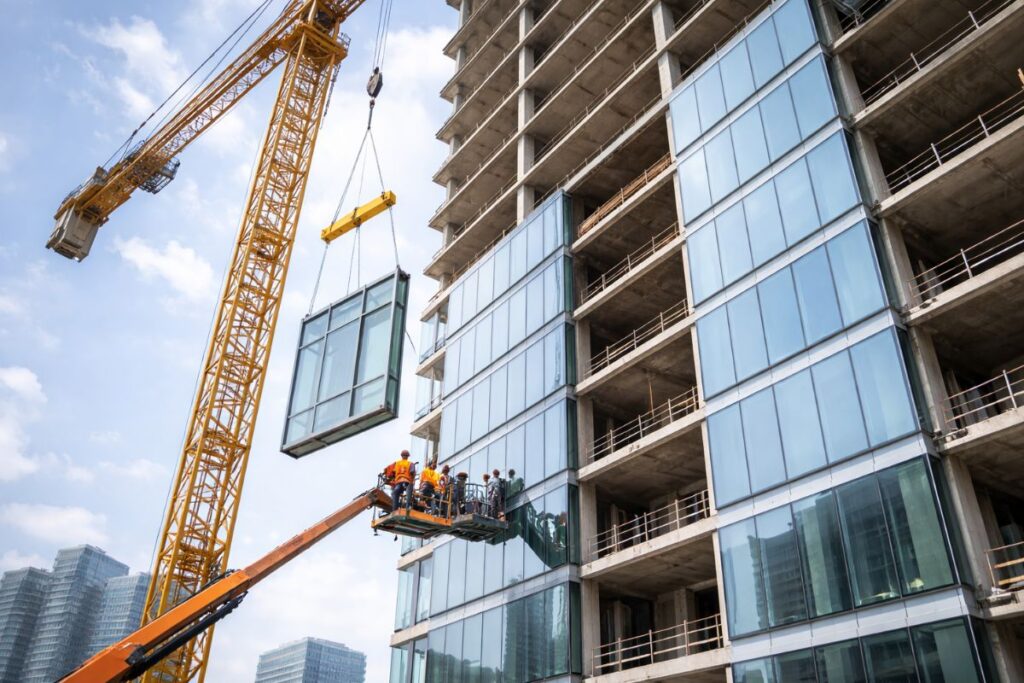
A unitized curtain wall system is built in a factory before it arrives at your job site. Each unit is a large, pre-assembled panel that includes the glass, frame, gaskets, and seals already installed. This means that on-site installation is much faster than stick-built because the panels simply stack and lock together. Also, factory assembly gives every panel consistent quality because they are built in a controlled environment without weather interference. This approach works best for mid-to-high-rise commercial buildings in Nevada County where speed and consistent panel quality are the top priorities. First, our crew installs the structural anchor brackets on each floor slab edge. Next, our team uses a panel-to-panel splice joint hydraulic compression clamp to close and compress the splice joint between each stacked factory-prefabricated unitized curtain wall panel assembly. This tool applies even pressure across the full width of the splice joint so the panel-to-panel connection is watertight and mechanically consistent. This installation meets the requirements of International Building Code Section 1409. This section covers curtain wall and exterior cladding performance requirements including water penetration resistance, air infiltration limits, and structural performance under wind and seismic loads. This means your unitized system is built to pass every required performance test before the building is occupied.

Structural Silicone Glazing
Structural silicone glazing is a system where the glass panels are bonded directly to the aluminum frame using a high-strength silicone sealant instead of mechanical clips or stops. This means that the glass face is smooth and continuous with no visible metal framing between panels. From the street, the building looks like a seamless wall of glass. This creates a premium, modern appearance for commercial buildings in Grass Valley and Nevada County where architecture and visual impression are a priority. This system requires strict quality control. First, our crew prepares the frame surfaces with a chemical primer to ensure the sealant bonds correctly. Next, our technicians use a silicone bead depth gauge calibration tool to measure the exact depth and width of every structural silicone sealant curtain wall bond joint as it is applied. This tool verifies that the bead dimensions meet the engineer’s specification at every point along the glass edge. An undersized bead cannot carry the required structural load. This work follows ASTM C1401, the Standard Guide for Structural Silicone Sealant Glazing. This standard sets the minimum bite, bead dimensions, curing time, and quality control procedures required for all structural silicone glazing installations. This means your SSG system is installed to the same standard used on commercial high-rise buildings across the country.
Aluminum, Steel & Hybrid Framing Systems
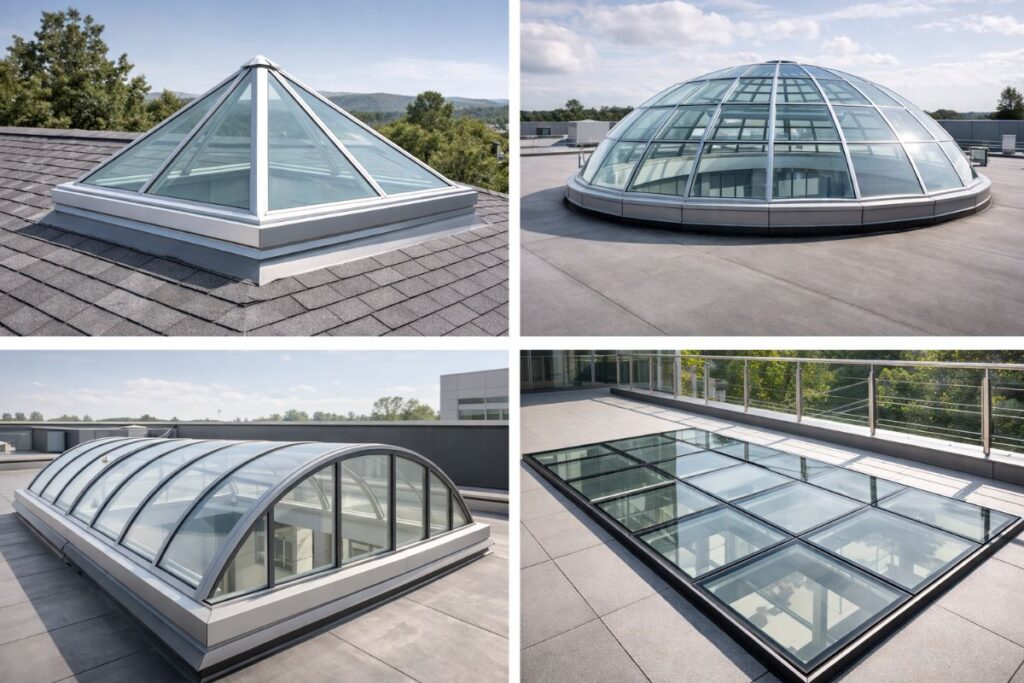
The framing system behind your curtain wall glass is what holds the entire facade together. It transfers wind load, thermal expansion stress, and seismic movement into the building structure without cracking the glass or breaking the seals. Aluminum is the most common choice. It is lightweight, corrosion-resistant, and available in a wide range of profile sizes. Steel is used when higher structural strength is needed for wider spans or heavier glass loads. Hybrid systems combine both materials for specific performance requirements. Also, all framing profiles we use are thermally broken meaning they have a barrier of insulating material inside the frame to prevent heat from transferring through the metal. First, we work with your project engineer to select the right framing profile for your building’s wind zone and seismic requirements. Next, our installers use a digital curtain wall anchor torque wrench calibrator to verify that every anchor bolt connecting the thermally broken aluminum curtain wall extrusion framing profile to the building structure is tightened to the engineer-specified torque value. This tool logs each torque reading so we have a documented record for the close-out package. This framing installation complies with California Building Code Section 1614. This section covers seismic design requirements for nonstructural building components, including curtain wall framing and cladding attachments.

Curtain Wall Retrofit & Replacement
Many commercial buildings in Grass Valley and Nevada County were built with curtain wall systems that are 20 to 40 years old. These systems often have failed sealants, broken IGUs, corroded framing sections, or glass that no longer meets current California energy code. Replacing an aging curtain wall is the right choice when the frame itself is damaged or when the system no longer meets code performance requirements. First, we perform a full facade assessment to identify which panels and framing sections can be salvaged and which need full replacement. Next, our crew uses a hydraulic panel demolition suction crane to remove old panels from the building facade safely. This tool attaches to the outer face of each panel and uses hydraulic suction to hold the panel firmly while the mechanical anchors are released and the panel is lowered to the ground. Then, we install replacement laminated low-E replacement curtain wall IGU panels into the refurbished or new framing system. This glass meets the commercial energy requirements of California Title 24 Part 6 Section 140.3. This section sets the maximum U-Factor and SHGC values for commercial fenestration replacements in California. This means your retrofit project will pass the Title 24 energy compliance review and bring your building up to current code performance standards.

Curtain Wall Maintenance & Inspection
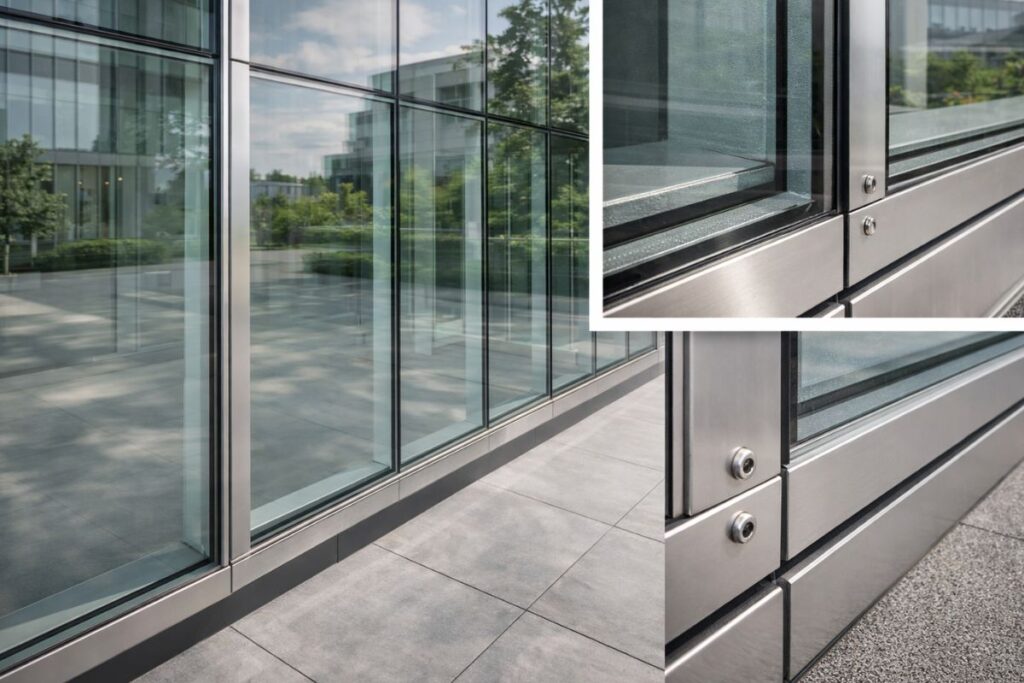
A curtain wall system needs regular inspection to stay watertight and performing correctly over time. Sealant joints dry out. Gaskets compress and lose their grip. Drainage weep holes get blocked by debris. If these small problems are not caught early, water gets into the wall assembly and causes damage to the building structure, interior finishes, and air quality. First, our inspection team walks the full facade and checks every sealant joint, glazing gasket, and drainage path for signs of wear, cracking, or blockage. Next, our technician uses an electronic air infiltration pressure differential meter to measure air leakage through curtain wall joints and EPDM rubber curtain wall glazing gaskets at specific test zones on the facade. This tool applies a controlled pressure difference across each test section and measures how much air passes through. This test follows ASTM E283, the Standard Test Method for Determining the Rate of Air Leakage Through Exterior Windows, Curtain Walls, and Doors. This standard sets the maximum allowable air leakage rate for commercial curtain wall systems under a defined pressure load. This means that after our inspection, you have a documented performance record showing whether your system meets or fails the ASTM E283 air leakage standard.

How Our Curtain Wall Installation Works
Every commercial project follows five structured phases:
Site Evaluation & Engineering Review
First, we assess site conditions, structural interfaces, access constraints, and installation sequencing. We identify risks before fabrication starts.
System Design Coordination & Shop Drawings
Next, we coordinate with architects and engineers to verify all dimensions, details, and constructability issues. We submit shop drawings for review and approval before we order any material.
Fabrication & Material Sourcing
Then, we manage fabrication lead times, material sourcing, and delivery sequencing to keep the project on schedule without gaps or delays on site.
On-Site Installation & Quality Control
Our experienced crew installs all framing, glass, seals, and hardware with continuous alignment checks, torque verification, and sealant inspection at every panel.
Final Inspection & Close-Out Documentation
Last, we complete all punch list items, verify system performance, and deliver required close-out documentation to the general contractor and building owner.
Before & After: Curtain Wall Glass Transformations
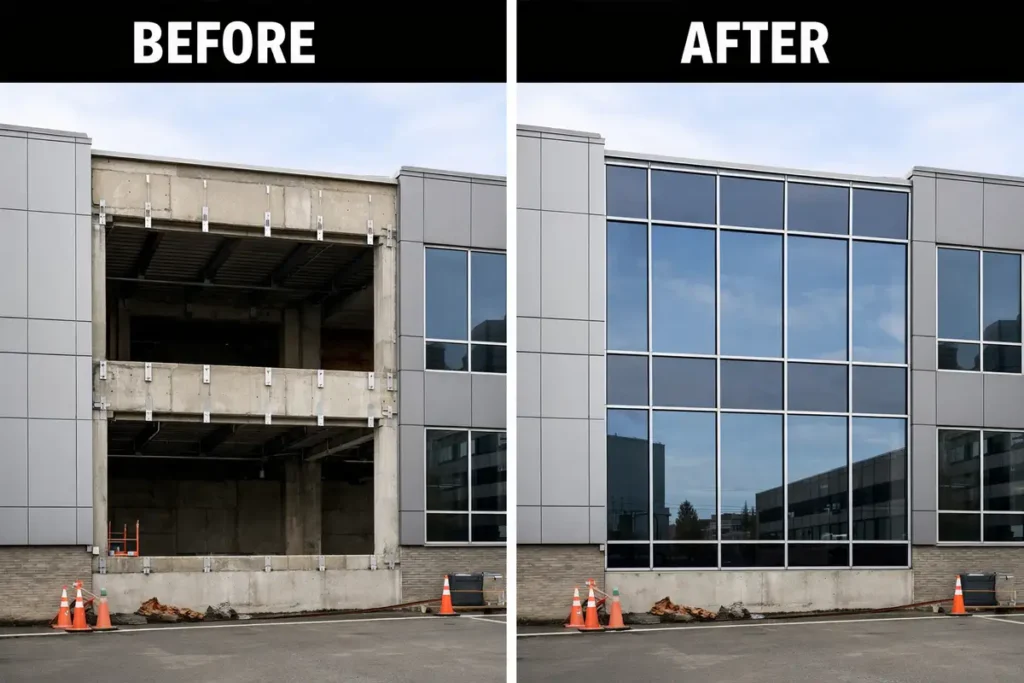
These before and after photos document a professional Curtain Wall Installation carried out on the same commercial building façade. The before image shows an exposed structural opening with unfinished concrete and framing.
while the after image highlights a clean, fully installed curtain wall system with aligned mullions and reflective glass panels. The transformation appears precise and realistic, demonstrating a completed installation that integrates seamlessly with the existing structure without altering the surrounding environment.
Start Your Commercial Curtain Wall Project Today
Are you planning a new commercial building, a tenant improvement, or a facade replacement in Grass Valley or Nevada County? We are ready to help. The team at Pro Glass and Mirror works directly with your general contractor, architect, and structural engineer from pre-construction through close-out. Call us today at 530-278-6935 to schedule a free on-site facade assessment. We will review your project, explain your system options, and give you a clear, honest budget range before any work begins.
Serving Grass Valley & Surrounding Areas
We provide top rated curtain wall installation services throughout Grass Valley and the greater Nevada County region, supporting commercial and institutional projects of varying size and complexity.
Our team regularly works with general contractors, architects, and building owners across nearby communities, allowing us to understand local site conditions, permitting considerations, and regional building requirements.
Our service areas include:
- Grass Valley
- Nevada City
- Penn Valley
- Alta Sierra
- Lake Wildwood
- Cedar Ridge
- Colfax
- North Auburn
- Smartsville
- Chicago Park
Frequently Asked Questions
How long does curtain wall installation take?
Low-rise stick-built projects typically take several weeks. Mid-to-high-rise or unitized curtain wall installations can span several months. Fabrication lead times, site access, and coordination with other trades all affect the schedule. We build a detailed timeline during pre-construction planning so there are no surprises.
Can curtain wall systems be retrofitted or replaced?
Yes. We replace full or partial curtain wall systems on existing buildings. Common reasons include failed sealants, broken IGUs, corroded framing, or outdated thermal performance that no longer meets California Title 24 energy code. We assess your existing facade and recommend the most cost-effective approach.
What maintenance does a curtain wall system need?
Routine inspection of sealant joints, glazing gaskets, drainage weep holes, and glass panel condition is recommended every one to three years. Regular maintenance catches small problems before they turn into expensive interior damage or air infiltration failures.
How long does a curtain wall system last?
A properly installed and maintained curtain wall system can last several decades. Individual components like sealants and gaskets need periodic replacement. The aluminum framing and glass panels themselves are designed for long-term service.
Does curtain wall glazing need to meet California Title 24 energy code?
Yes. All commercial curtain wall glazing in California must meet the U-Factor, SHGC, and Visible Light Transmittance (VLT) requirements for your specific climate zone under California Title 24 Part 6. We specify compliant glass from the start and document compliance in every permit package.
Do curtain wall systems in Nevada County need to be seismic-rated?
Yes. Nevada County falls within California Seismic Zone D. All curtain wall framing and anchor systems must be engineered to accommodate inter-story seismic drift. We coordinate seismic anchor details directly with your project’s structural engineer.
What is the difference between stick-built and unitized curtain walls?
A stick-built system is assembled on-site piece by piece. It is more flexible for irregular layouts but takes longer to install. A unitized system arrives as pre-assembled panels that stack and connect on site. It is faster to install and delivers more consistent quality, but requires more lead time for factory fabrication.
How much does curtain wall installation cost in Grass Valley?
Cost is driven by building height, system type, glass specification, framing profile, crane access, and permit requirements. Stick-built systems typically have lower material costs but higher on-site labor. Unitized systems have higher upfront material costs but shorter on-site installation time. Call us at 530-278-6935 for a free project consultation and budget discussion.